EV Battery Health Canada: How to Check Before Buying a Used EV
Buying a used electric vehicle in Canada can save you money, but only if the battery is in good condition. The battery is the most expensive component of an EV, and replacing it can cost a lot of money. That’s why checking the EV battery health before buying a used car is very important.
In this guide, we will explain how to check EV battery health in Canada, what methods you can use, and what warning signs you should look for before making a decision.
Why Checking EV Battery Health Matters
The health of an EV battery directly affects its range, performance, and resale value. A degraded battery can lead to:
- Reduced driving range
- Longer charging times
- Higher chances of future repairs
- Lower resale value when you sell the car later
Because Canadian winters are harsh, batteries can degrade faster if the vehicle was not properly maintained. Therefore, always check the battery health before buying a used EV.
What is EV Battery Health?
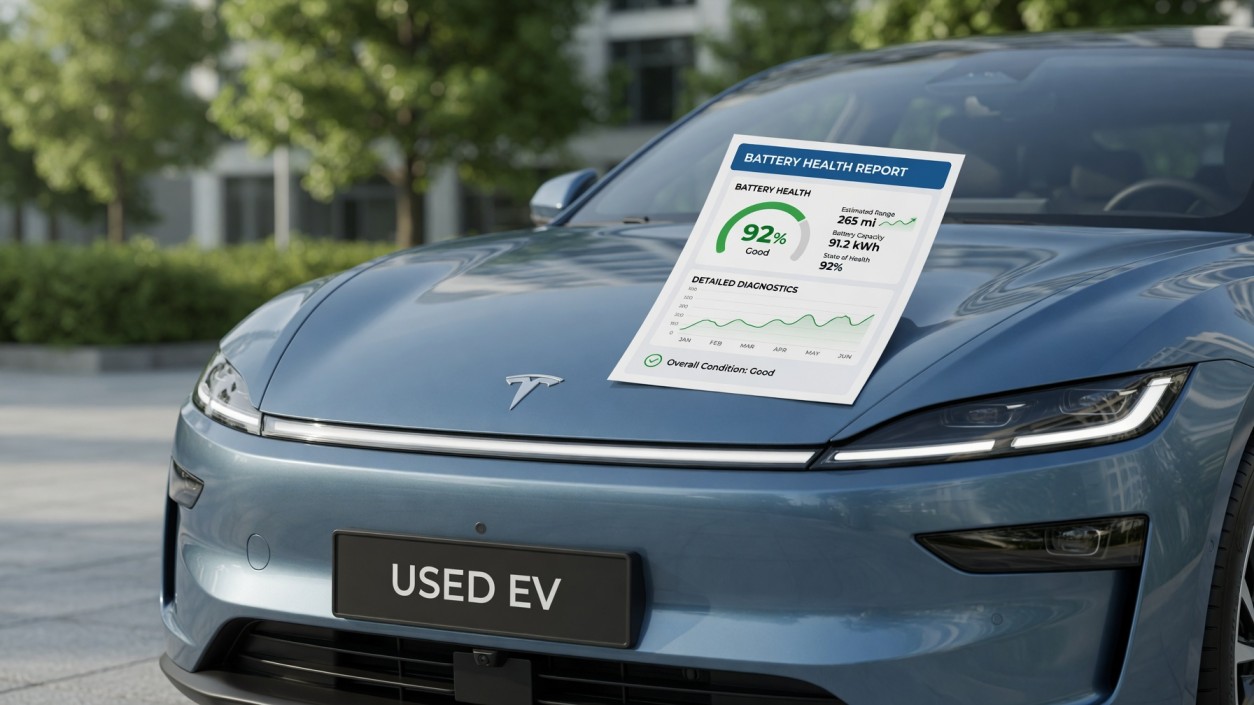
EV battery health is usually measured as State of Health (SoH). It shows the percentage of the original battery capacity that is still available. For example:
- 100% SoH means the battery is brand new
- 90% SoH means 10% of the capacity has already been lost
- Below 70% SoH means the battery may need replacement soon
Most experts recommend buying a used EV with at least 85–90% battery health.
Methods to Check EV Battery Health
Here are the most reliable ways to check battery health before buying a used electric car in Canada:
Red Flags to Watch For
Before buying a used EV, watch out for these warning signs:
- The car has much less range than expected
- The battery takes too long to charge
- Warning lights related to the battery appear on the dashboard
- The car has been in a major accident
- The seller avoids showing battery health data
If you notice any of these signs, it is better to negotiate a lower price or walk away from the deal.
Cost of EV Battery Replacement in Canada
If the battery health is very low, you may need to replace it in the future. Here are approximate replacement costs:
Tip: Many EVs still have battery warranty remaining (usually 8 years or 160,000 km). Always check the remaining warranty before buying.
Final Tips Before Buying a Used EV
- Always get a battery health report before finalizing the purchase.
- Prefer vehicles with at least 85–90% battery health.
- Buy from trusted sellers or certified EV dealers.
- Test drive the car on the highway to check real-world range.
- Consider getting an extended warranty if the battery health is below 90%.
Final Thoughts
Checking EV battery health before buying a used car in Canada is one of the most important steps. A healthy battery ensures better range, lower maintenance costs, and higher resale value in the future.
By using the right methods and following the tips mentioned above, you can avoid buying a used EV with a weak battery. Take your time, do proper checks, and don’t hesitate to get professional help if needed.
Would you like a step-by-step guide on how to use an OBD scanner to check battery health? Or do you want recommendations for the best used EVs available in Canada right now?