How Canada’s EVAP and Auto Strategy Are Changing Dealership Operations in 2026
The EVAP dealership impact 2026 is already clear across Canada. The federal Auto Strategy and Electric Vehicle Affordability Program (EVAP) have shifted how dealerships manage inventory, process sales, and handle cash flow this year.
EVAP Dealership Impact 2026 on Daily Operations
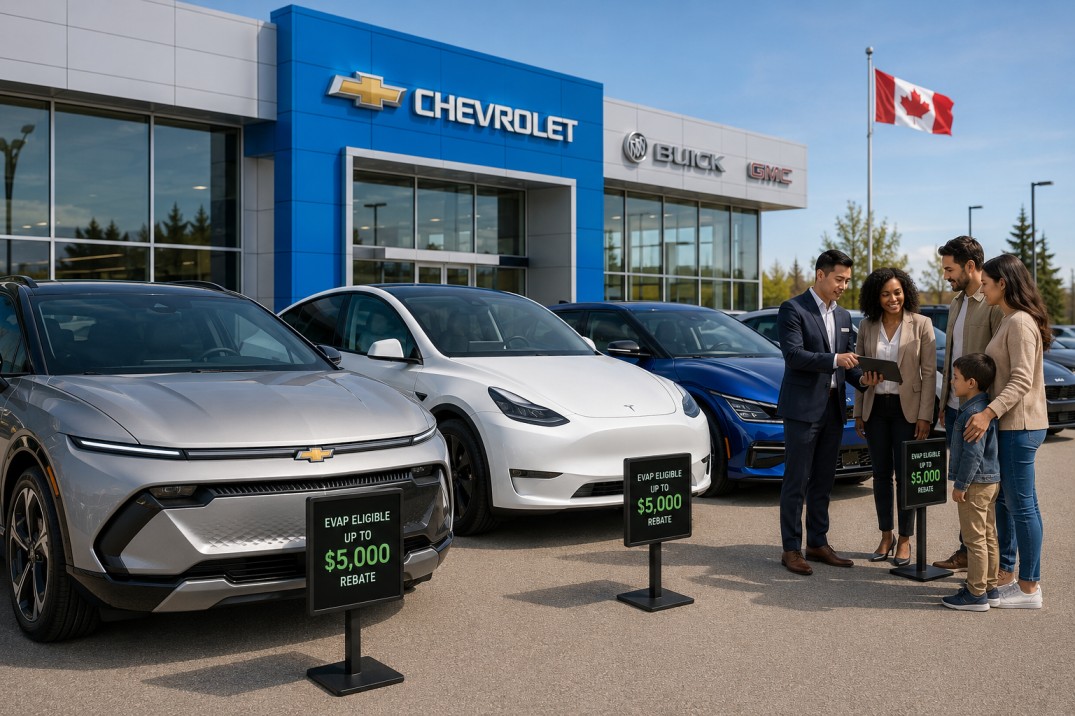
EVAP delivers up to $5,000 for eligible battery-electric vehicles and $2,500 for plug-in hybrids in 2026. The rebate applies at the point of sale to vehicles with a final transaction value of $50,000 or less (no cap for Canadian-made models). Only vehicles produced in Canada or free-trade partner countries qualify.
Dealerships must manage the full process: collect consumer consent, confirm eligibility before delivery, apply the rebate immediately, and submit claims through the federal portal. Early reports showed some reimbursement delays, creating temporary cash-flow pressure because dealers advance the incentive first.
This new workflow has become a core part of the sales process. Staff training on eligibility checks and documentation is now essential. At the same time, the rebate has proven to be an effective closing tool in a softer new-vehicle market.
For official program details, see the Transport Canada EVAP overview.
Inventory Changes Driven by EVAP Dealership Impact 2026
Dealers are prioritizing models that clearly qualify for the full 2026 incentive. Higher-priced or non-eligible electric vehicles tend to stay longer on the lot. Canadian-made EVs and more affordable models receive stronger focus.
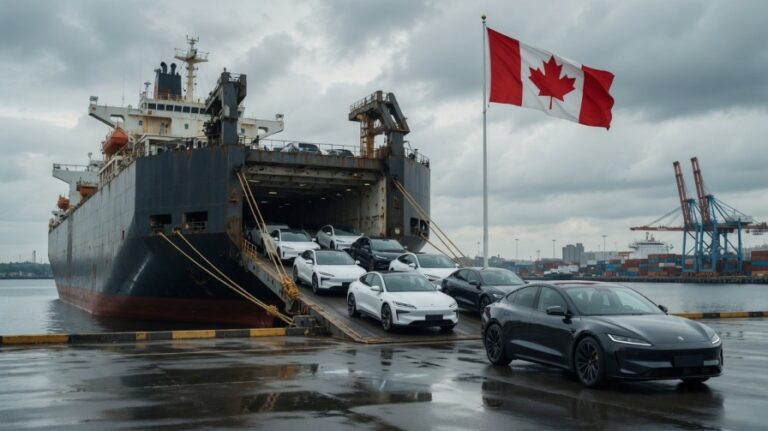
Manufacturers have responded by adjusting prices or adding temporary discounts so more trims remain under the $50,000 threshold. The limited entry of Chinese-built electric vehicles under a quota is adding further competition later in 2026.
Accurate forecasting matters more than ever. Overstocking non-qualifying models raises carrying costs, while running short on popular eligible vehicles risks lost sales during the highest-value year of the program.
Related reading on our site:
Opportunities and Challenges for Canadian Dealers
The removal of rigid sales mandates has given dealers more flexibility to match inventory to real local demand. Urban stores with strong EV interest have generally seen faster turnover of qualifying models. Rural dealerships still face slower uptake due to charging access.
Successful dealers treat the EVAP dealership impact 2026 as a core operational change rather than an extra task. They train staff thoroughly, keep accurate records, and invest in service capacity and on-site charging.
As incentive amounts begin declining in 2027 and more models arrive, efficient processes and smart inventory decisions will remain essential for Canadian dealerships.
For background on the broader policy, review the Prime Minister’s Auto Strategy announcement.