Electric Garbage Trucks Canada: Progress and Challenges
Waste management is one of the most important municipal services in Canada. Every day, thousands of garbage trucks collect waste across cities and towns. However, these diesel-powered trucks contribute significantly to air pollution and greenhouse gas emissions. Because of this, many Canadian municipalities are now exploring electric garbage trucks as a cleaner alternative. In this article, we will examine the current progress and challenges of using electric garbage trucks in Canada.
Why Municipalities Are Considering Electric Garbage Trucks
Traditional garbage trucks run on diesel and operate for long hours, often starting very early in the morning. They produce high levels of emissions and noise, which affects both the environment and residents. Electric garbage trucks offer a promising solution because they produce zero tailpipe emissions and operate much more quietly. This makes them especially suitable for residential areas where early morning noise can be a concern.
In addition, electric trucks have lower operating costs over time since electricity is cheaper than diesel, and they require less maintenance due to fewer moving parts.
Current Progress in Canada
Several Canadian cities have started testing or deploying electric garbage trucks on a small scale:
- Toronto has conducted pilot projects with electric collection vehicles to evaluate their performance in real-world conditions.
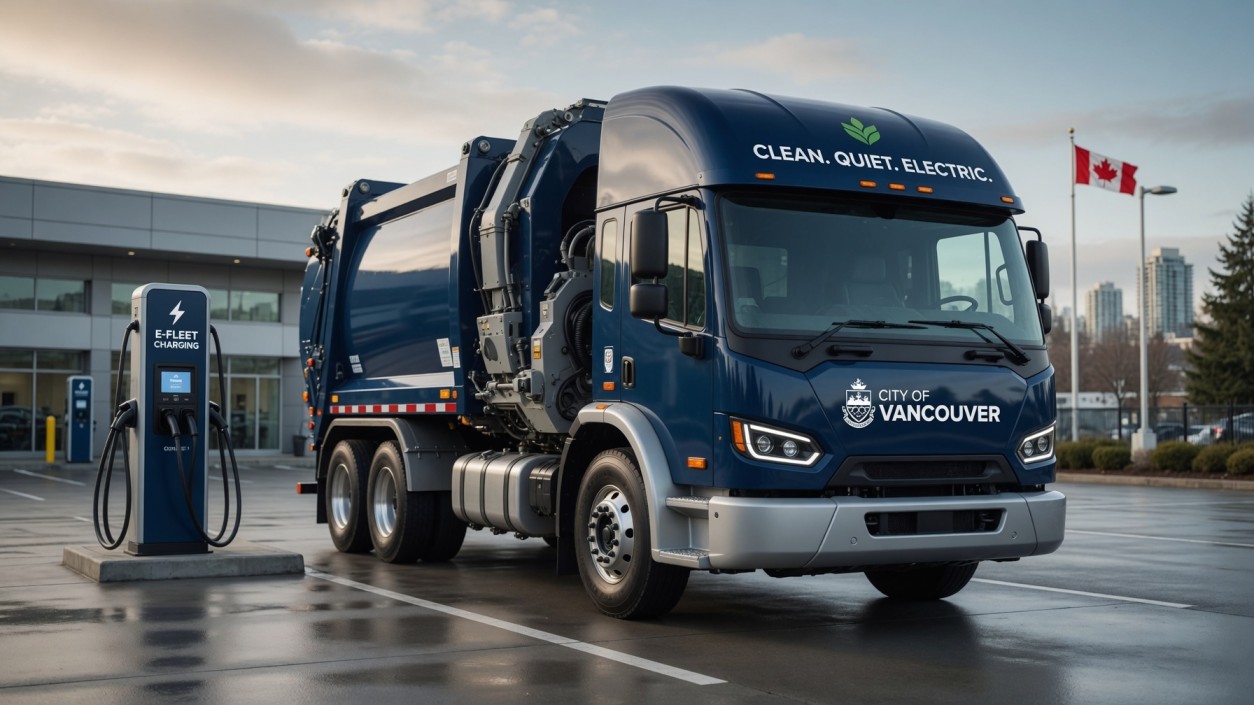
- Vancouver has shown interest in electrifying parts of its waste collection fleet as part of its climate action plan.
- Montreal has also explored electric options for municipal services, including waste collection.
- Some smaller municipalities in British Columbia and Quebec have started limited trials with electric garbage trucks.
However, large-scale adoption is still limited. Most cities are currently in the testing or early implementation phase rather than full fleet replacement.
Benefits of Electric Garbage Trucks
Electric garbage trucks offer several advantages for Canadian municipalities:
- They significantly reduce local air pollution, which improves air quality in residential neighborhoods.
- They operate much more quietly than diesel trucks, reducing noise complaints from residents.
- They have lower fuel and maintenance costs in the long run.
- They align with municipal climate targets and help cities meet their emission reduction goals.
- They can improve the public image of the city as environmentally responsible.
These benefits make electric garbage trucks attractive, especially for cities with strong sustainability commitments.
Major Challenges
Despite the benefits, there are several serious challenges that are slowing down the adoption of electric garbage trucks in Canada:
- High Upfront Cost: Electric garbage trucks are significantly more expensive than diesel trucks. Many municipalities find it difficult to justify the high initial investment.
- Limited Range: Garbage trucks operate for long hours and cover large areas. Current electric models sometimes struggle to complete full routes on a single charge, especially in winter.
- Cold Weather Performance: Canadian winters cause a major drop in battery range and charging speed. This is a critical issue for waste collection, which must continue regardless of weather conditions.
- Charging Infrastructure: Most municipal depots are not yet equipped with the high-power charging systems required for heavy-duty electric trucks.
- Limited Model Availability: There are still fewer electric options available in the heavy-duty garbage truck segment compared to light-duty vehicles.
- Weight and Payload Concerns: Electric trucks are heavier due to batteries, which can sometimes reduce the amount of waste they can carry per trip.
These challenges are more difficult to overcome in waste management compared to passenger vehicles or lighter municipal fleets.
Future Outlook
The adoption of electric garbage trucks in Canada is expected to grow gradually over the next 5 to 10 years. As battery technology improves and more heavy-duty electric truck models enter the market, municipalities will have better options. Federal and provincial funding programs for zero-emission vehicles may also help cities overcome the high initial costs.
Some experts believe that by 2030, a larger number of Canadian cities will begin replacing parts of their waste collection fleets with electric trucks, especially in urban areas where air quality and noise reduction are priorities.
Final Thoughts
The transition to electric garbage trucks in Canada is still in its early stages. While the environmental and operational benefits are clear, the practical challenges related to cost, range, winter performance, and infrastructure remain significant. Municipalities that want to electrify their waste fleets will need strong financial support, better charging infrastructure, and continued improvements in electric truck technology.
Overall, electric garbage trucks represent an important step toward cleaner and quieter cities. However, widespread adoption will depend on how effectively governments and manufacturers address the current limitations over the next few years.
Would you like me to also cover the progress of electric garbage trucks in specific Canadian cities like Toronto, Vancouver, or Montreal?