

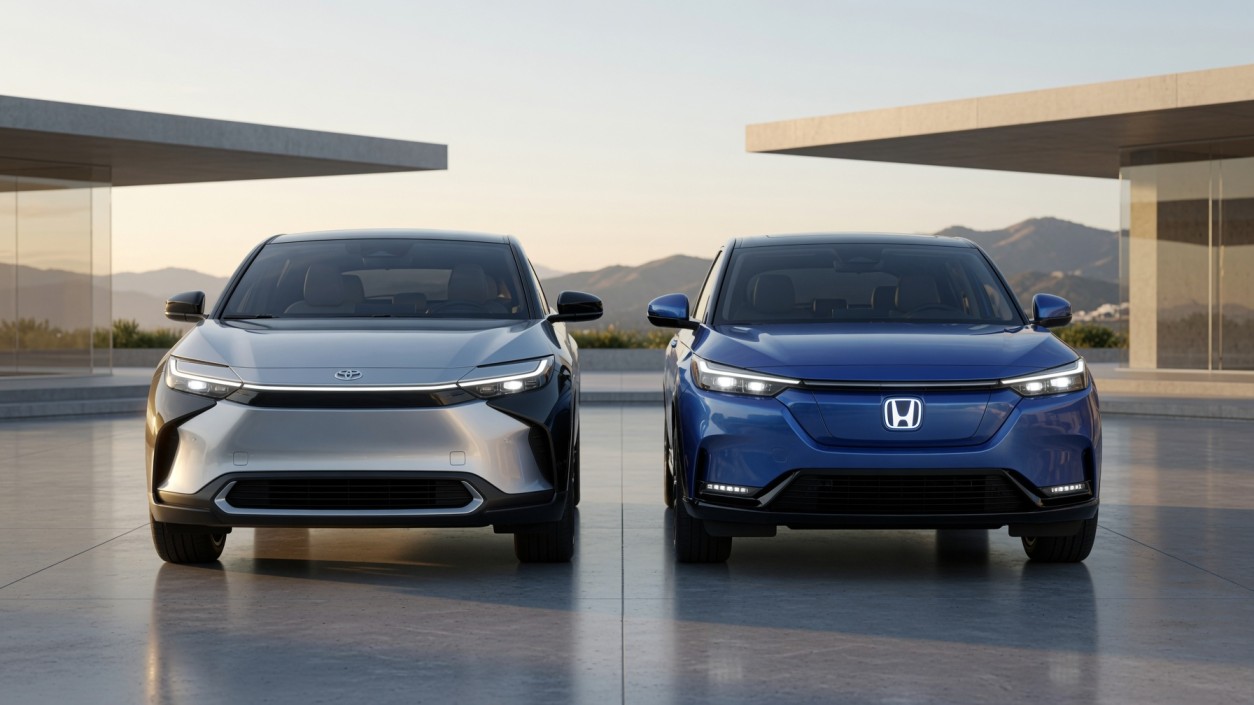
Japanese automakers Toyota and Honda have traditionally been cautious about fully electric vehicles, focusing more on hybrid technology. However, both companies are now accelerating their EV strategies, especially for the North American market, including Canada.
As Canada moves toward its 2035 zero-emission vehicle targets, Toyota and Honda are preparing several new electric models for launch between 2026 and 2027. In this article, we will explore their upcoming EV plans and what Canadian buyers can expect.

Toyota’s EV Plans for Canada (2026-2027)
Toyota has been slower than many competitors in launching full electric vehicles. However, the company is now expanding its EV lineup significantly.
Key Models Expected:
- Toyota bZ4X (Updated Version): Toyota plans to launch an updated version of its first dedicated EV with improved range and faster charging.
- Toyota bZ5X: A larger electric SUV expected to compete with models like Tesla Model Y and Hyundai Ioniq 5.
- Toyota bZ3X: A more affordable electric crossover aimed at a wider audience.
Toyota is also working on solid-state battery technology, though it is unlikely to appear in vehicles before 2027-2028. For the Canadian market, Toyota is focusing on improving cold-weather performance and offering competitive pricing.
Honda’s EV Plans for Canada (2026-2027)
Honda has taken a more aggressive approach toward electrification compared to Toyota in recent years.
Key Models Expected:
- Honda Prologue (Updated): Honda’s first major EV in North America, built on GM’s Ultium platform. An updated version is expected with improved features.
- Honda e:N Series: Honda is developing its own dedicated EV platform. Models like the e:N1 and e:N2 are expected to launch in Canada around 2026-2027.
- Honda EV SUV (3-Row): Honda is also working on a larger three-row electric SUV to compete in the family segment.
Honda aims to launch 30 new EV models globally by 2030, with several of them expected to reach the Canadian market during 2026-2027.
Comparison: Toyota vs Honda EV Strategy for Canada
| Factor | Toyota | Honda |
|---|---|---|
| EV Launch Speed | Slower but steady | More aggressive |
| Key Models (2026-27) | bZ4X, bZ5X, bZ3X | Prologue, e:N Series |
| Focus Area | Cold weather performance & reliability | Design, technology & performance |
| Battery Technology | Working on solid-state batteries | Using GM Ultium + own platform |
| Target Segment | Mass market & reliability-focused buyers | Tech-savvy and family buyers |
Challenges for Toyota and Honda in Canada
Both companies face some challenges while entering the Canadian EV market:
- Strong competition from Tesla, Hyundai, Kia, and upcoming Chinese brands.
- High consumer expectations for range and winter performance.
- Need for strong service and charging infrastructure support.
- Balancing hybrid and full EV strategies (both companies still sell many hybrids).
Expected Impact on Canadian EV Market
Toyota and Honda entering the EV market more aggressively will likely:
- Increase competition and possibly lower prices.
- Give buyers more choices, especially in the mid-size SUV segment.
- Help normalize EVs among traditional Japanese car buyers who were previously hesitant.
Final Thoughts
Both Toyota and Honda are preparing serious EV lineups for the Canadian market between 2026 and 2027. While Toyota is focusing on reliability and gradual transition, Honda appears more aggressive with new platforms and designs.
Their entry will bring more competition and options for Canadian buyers. However, success will depend on how well they address Canadian-specific needs like winter performance, pricing, and after-sales support.
Would you like a model-wise comparison of their upcoming EVs or a focus on pricing expectations in Canada?