

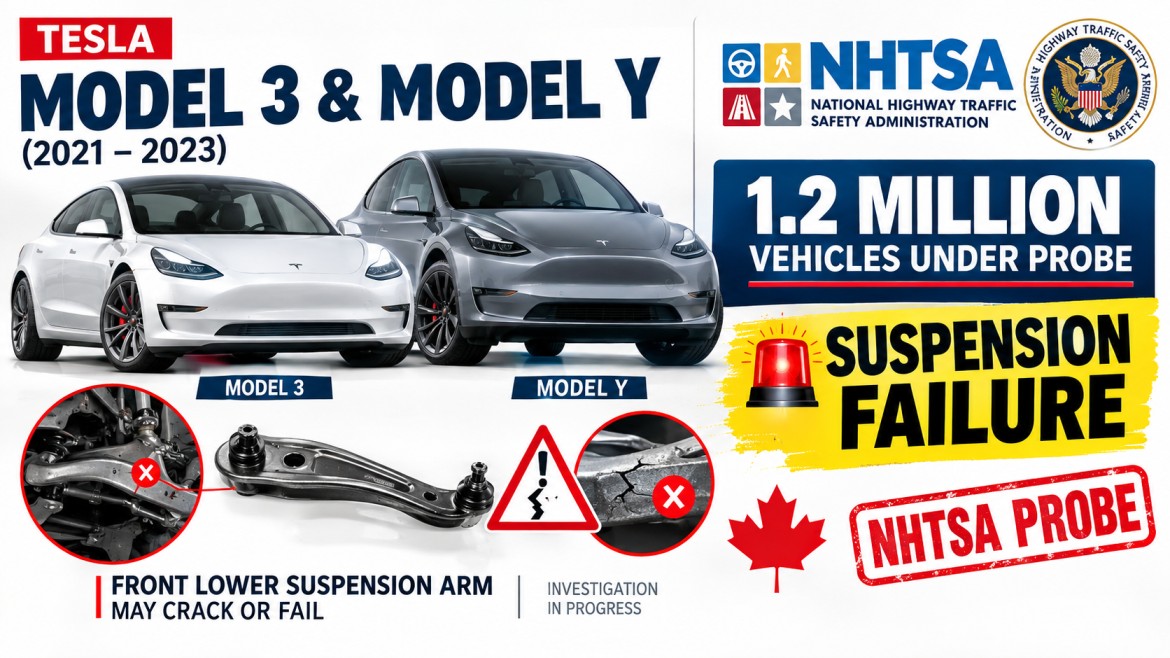
Canadian EV owners who drive Tesla Model 3 or Model Y should pay attention. The U.S. National Highway Traffic Safety Administration (NHTSA) has just opened a preliminary evaluation into nearly 1.2 million of these vehicles over a potential suspension problem.

The Issue in Simple Terms
NHTSA received 156 complaints about the front lower lateral link (a key part of the front suspension). In most cases, this link simply detaches while the car is driving. Owners say there is often no warning — the vehicle suddenly becomes undrivable and needs to be towed. No crashes, injuries, or fatalities have been reported so far.
Which Vehicles Are Affected?
The investigation covers:
- Model 3 from 2018 to 2020
- Model Y from 2021 to 2023
That’s roughly 1.2 million vehicles in total.
This Isn’t Tesla’s First Rodeo
Tesla has dealt with this same part before. In 2021 and 2023, the company issued recalls for a few hundred Model 3s. NHTSA says the current complaints go beyond those earlier fixes — it looks like a different issue.
What Happens Next?
NHTSA’s Office of Defects Investigation is in the first stage (preliminary evaluation). They will check the cause, how widespread it is, and whether it’s a safety defect. If they decide yes, they could issue a recall or other action. Nothing is confirmed yet — this is still early.
What Canadian Tesla Owners Should Do
- If you notice any clunking noise, loose feeling, or sudden steering issues, get your car checked at a Tesla service centre or trusted mechanic right away.
- Check your VIN on the NHTSA website or Tesla’s owner portal for any updates.
- Software updates alone probably won’t fix a physical suspension link problem.
This story came out in late July 2026 and is still active.
Canadian EV owners who drive Tesla Model 3 or Model Y should pay attention. The U.S. National Highway Traffic Safety Administration (NHTSA) has just opened a preliminary evaluation into nearly 1.2 million of these vehicles over a potential suspension problem.
The Issue in Simple Terms
NHTSA received 156 complaints about the front lower lateral link (a key part of the front suspension). In most cases, this link simply detaches while the car is driving. Owners say there is often no warning — the vehicle suddenly becomes undrivable and needs to be towed. No crashes, injuries, or fatalities have been reported so far.
Which Vehicles Are Affected?
The investigation covers:
- Model 3 from 2018 to 2020
- Model Y from 2021 to 2023
That’s roughly 1.2 million vehicles in total.
This Isn’t Tesla’s First Rodeo
Tesla has dealt with this same part before. In 2021 and 2023, the company issued recalls for a few hundred Model 3s. NHTSA says the current complaints go beyond those earlier fixes — it looks like a different issue.
What Happens Next?
NHTSA’s Office of Defects Investigation is in the first stage (preliminary evaluation). They will check the cause, how widespread it is, and whether it’s a safety defect. If they decide yes, they could issue a recall or other action. Nothing is confirmed yet — this is still early.
What Canadian Tesla Owners Should Do
- If you notice any clunking noise, loose feeling, or sudden steering issues, get your car checked at a Tesla service centre or trusted mechanic right away.
- Check your VIN on the NHTSA website or Tesla’s owner portal for any updates.
- Software updates alone probably won’t fix a physical suspension link problem.
This story came out in late July 2026 and is still active. We’ll keep you posted here on nextev.ca as soon as NHTSA or Tesla drops new information.