

Solid state batteries are considered one of the biggest breakthroughs in electric vehicle technology. They promise longer range, faster charging, and better safety compared to current lithium-ion batteries. However, despite years of research, this technology is still not widely available in commercial electric vehicles as of 2026.
In this article, we will explain what solid state batteries are, their current status, and when they are likely to arrive in Canada.
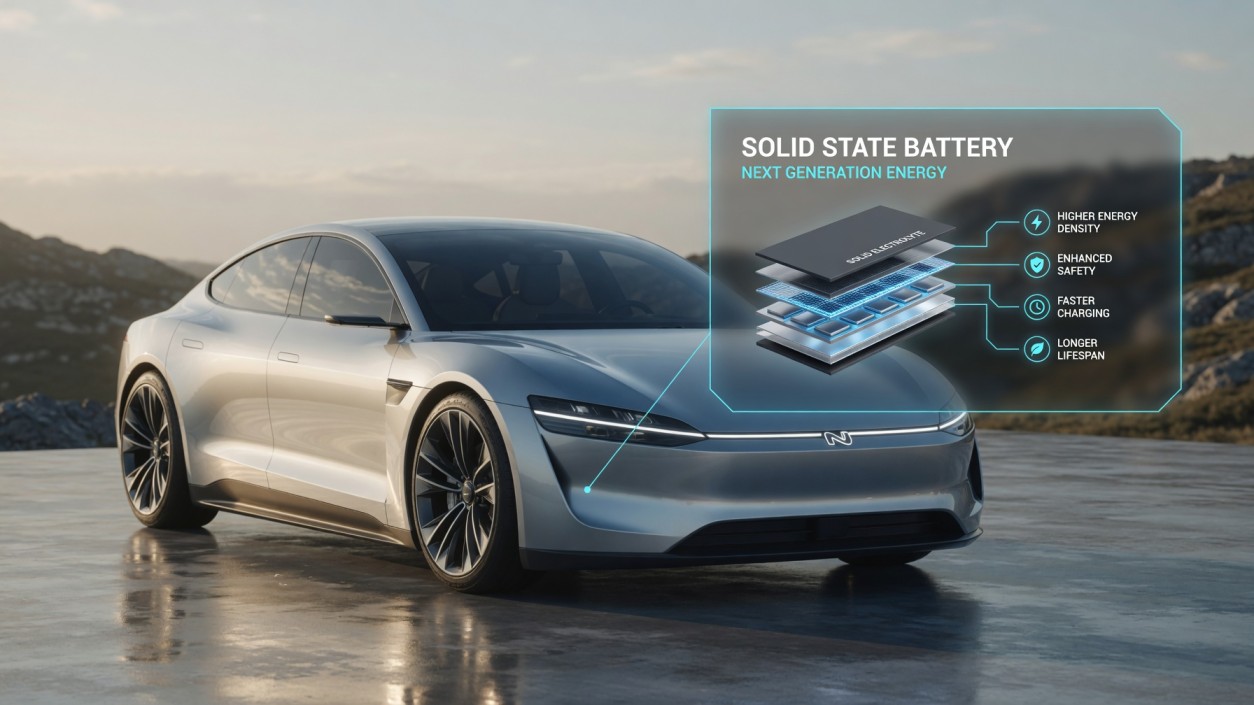

What Are Solid State Batteries?
Unlike traditional lithium-ion batteries that use liquid electrolytes, solid state batteries use a solid electrolyte. This change brings several potential advantages, such as higher energy density, faster charging, improved safety, and longer battery life. Because of these benefits, many experts believe solid state batteries will play a major role in the future of electric vehicles.
Current Status of Solid State Batteries in 2026
As of mid-2026, solid state batteries are still mostly in the development and testing phase. While several companies have made progress, mass production for passenger electric vehicles has not yet started.
For example, Toyota has been working on solid state batteries for many years but has repeatedly delayed its launch timeline. The company now aims to introduce solid state batteries in vehicles between 2027 and 2028. Similarly, companies like QuantumScape and Factorial Energy are also developing this technology, but they are still in the pilot testing stage.
Overall, experts believe that limited commercial use of solid state batteries in passenger EVs may begin between 2027 and 2030, with wider adoption likely after 2030.
Challenges in Bringing Solid State Batteries to Market
Even though solid state batteries offer many advantages, several major challenges are slowing down their commercialization:
- High manufacturing costs make large-scale production difficult.
- Technical issues, such as dendrite formation, can affect battery safety and performance.
- New materials and manufacturing processes are still being developed.
- Solid state batteries need to pass strict safety and durability tests before they can be used in vehicles.
Because of these challenges, most automakers have pushed back their timelines for introducing solid state battery vehicles.
Solid State Batteries and Canada
Canada currently does not have any major solid state battery manufacturing facilities. Most research and development in this field is happening in countries like Japan, South Korea, the United States, and parts of Europe.
However, Canada is not completely out of the picture. Several Canadian universities and research institutions are conducting studies on solid state battery materials. The Canadian government has also shown interest in supporting battery technology through funding programs. Despite this, it is unlikely that solid state battery-powered vehicles will be manufactured in Canada in the near future.
When Will Solid State Batteries Arrive in Canada?
Based on current global developments, here is a realistic timeline for Canada:
| Timeline | Expected Development | Likelihood in Canada |
|---|---|---|
| 2026 – 2027 | Limited pilot projects and testing | Low |
| 2027 – 2028 | First commercial solid state EVs (limited models) | Low to Medium |
| 2028 – 2030 | Wider availability in premium and mid-range EVs | Medium |
| After 2030 | Mass adoption in many EV models | High |
Final Thoughts
Solid state batteries have the potential to greatly improve electric vehicles by offering longer range, faster charging, and better safety. However, as of 2026, this technology is still not ready for widespread commercial use.
For Canada, solid state battery-powered EVs are unlikely to become commonly available before 2028–2030. Until then, most electric vehicles in Canada will continue to use improved versions of lithium-ion batteries.
While the wait may be longer than many expected, the arrival of solid state batteries could mark a major turning point for the electric vehicle industry in Canada and around the world.
Would you like me to also write about which car companies are leading in solid state battery development?