

Home charger cost Canada usually lands between $1,200 and $2,700 before tax for a Level 2 (240V) station. The charger itself is often $400 to $1,200. The electrician is the swing factor. A short run from the panel stays cheap. A long cable, a panel upgrade, or an outdoor winter-rated install can double the bill.
A Level 2 unit adds about 30 to 50 km of range per hour. That is why it beats a regular 120V outlet for Canadian winter commutes.
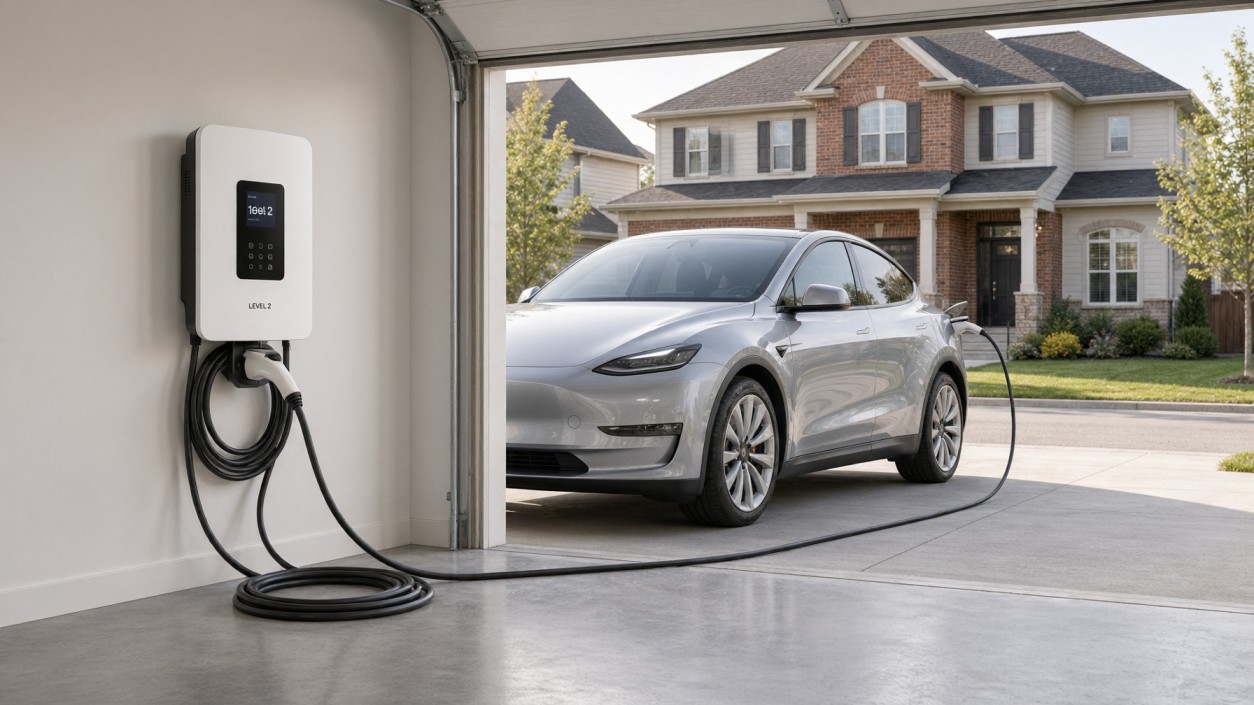

What you pay before rebates
A simple garage install in many mid-size cities averages about $1,500 to $1,800. Toronto, Vancouver, and Victoria run higher. Windsor, Regina, and Quebec City often run lower.
Budget jobs use a plug-in unit on a new 14-50 outlet. Premium jobs hardwire a smart charger and add a longer conduit run. Panel upgrades can add $1,000 or more.
Hire a licensed electrician. Insurance and most rebates require it.
Rebates by province in 2026
Quebec: Écorecharge still pays up to $600 for a home Level 2 station. From April 1, 2026, the charger must be connected. Use a listed model and a licensed installer. Multi-unit buildings can get more help, up to $5,000 in some cases.
British Columbia: CleanBC / BC Hydro pays up to 50% of eligible costs, capped at $350 for most single-family homes. Indigenous applicants can get up to $750. The charger usually must be smart.
Prince Edward Island: Some buyers can still claim about $750 toward a Level 2 install, plus extra help on panel upgrades. Confirm the current form before you buy.
Ontario, Alberta, Saskatchewan, Manitoba, most of Atlantic Canada: There is no broad provincial hardware rebate in 2026. Check your local utility. A few Ontario utilities offer time-of-use plans or small credits instead of cash.
Yukon: New charger purchases after March 31, 2026, generally miss the old rebate window.
Federal EVAP is for the vehicle, not the wall box. You can still use EVAP on an eligible car and pay for the charger separately. That split can also keep a car under the $50,000 EVAP cap.
How to keep the cost down
Pick a CSA- or UL-listed smart charger if you want a rebate. Place it close to the panel. Charge overnight on the cheapest rate. In Ontario, ultra-low overnight pricing can matter more than a $350 rebate.
Do not overbuy. Most Canadian homes do not need a 19 kW unit. A 7.2 to 11.5 kW charger is enough.
After you install
Home Level 2 charging also helps winter trips. You can precondition the cabin and battery while plugged in, then leave with a warm pack. That is cheaper than a long DC stop on a -20°C morning.
Confirm live rebate rules before you book the electrician. Programs run out of money.
Official starting points: Quebec Écorecharge and Transport Canada EVAP.
For car prices, see our cheapest electric cars Canada guide. For highway charging after you leave home, use the EV road trip apps guide.