

Canada has set ambitious targets to reduce greenhouse gas emissions, and one important part of this plan is the EV government fleet transition. Governments at the federal, provincial, and municipal levels are gradually replacing traditional gasoline and diesel vehicles with electric ones. While progress is being made, the transition also comes with several challenges. In this article, we will examine how Canada is moving toward electric government fleets and what obstacles still remain.

Why Government Fleet Electrification Matters
Government vehicles play a significant role in Canada’s overall transportation emissions. Federal, provincial, and municipal fleets include thousands of cars, trucks, buses, and specialized vehicles. Transitioning these fleets to electric vehicles can help reduce emissions, lower long-term operating costs, and set an example for the private sector. Because governments are large-scale buyers, their shift to EVs can also help drive demand and support the growth of the Canadian EV industry.
Current Status of EV Government Fleet Transition
The Canadian government has been actively working on electrifying its own fleet. The federal government has set a target to make 100% of its light-duty vehicle purchases zero-emission by 2030. Several departments have already started introducing electric vehicles into their fleets.
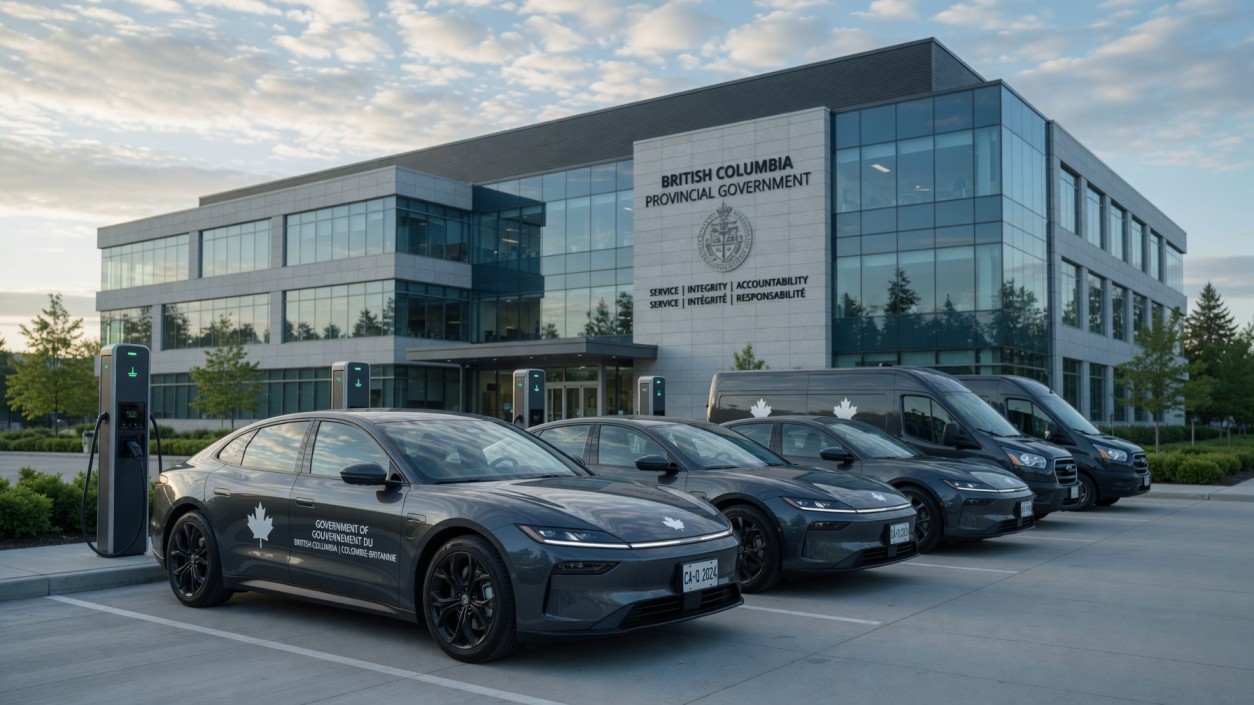
At the provincial level, provinces like British Columbia, Quebec, and Ontario have also launched their own fleet electrification programs. Many municipalities, especially larger cities like Toronto, Vancouver, and Montreal, are replacing older vehicles with electric ones, particularly in public transit and municipal service fleets.
However, the pace of adoption varies significantly across different levels of government and regions.
Federal Government Initiatives
The federal government has introduced several measures to support fleet electrification:
- It has committed to purchasing only zero-emission vehicles for its light-duty fleet by 2030.
- Some departments have started pilot projects to test electric vehicles in real-world conditions.
- The government is also investing in building charging infrastructure at federal facilities.
Despite these efforts, full fleet electrification at the federal level is still in progress, and many vehicles in the current fleet remain gasoline or diesel-powered.
Provincial and Municipal Efforts
Several provinces and cities are also making progress:
- British Columbia and Quebec have been relatively proactive in electrifying their government fleets.
- Many municipalities are focusing on electrifying public transit buses and municipal service vehicles first, as these offer higher environmental benefits.
- Some cities have set their own targets to transition their entire municipal fleets to electric by 2030 or 2035.
However, smaller municipalities often face greater challenges due to limited budgets and infrastructure.
Major Challenges in Government Fleet Transition
Despite the positive intentions, several challenges are slowing down the EV government fleet transition in Canada:
- High Upfront Costs: Electric vehicles, especially larger trucks and specialized vehicles, are more expensive than their gasoline counterparts.
- Charging Infrastructure: Many government facilities still lack sufficient charging stations, especially in remote areas.
- Cold Weather Performance: Range loss in extreme Canadian winters remains a concern for long-distance and emergency vehicles.
- Limited Model Availability: Not all types of government vehicles (such as heavy-duty trucks or specialized equipment) have suitable electric alternatives yet.
- Training and Maintenance: Government mechanics and technicians need proper training to service electric vehicles.
These challenges are more pronounced in rural and northern regions compared to major urban centers.
Benefits of Electrifying Government Fleets
Despite the challenges, transitioning government fleets to electric vehicles offers several long-term benefits:
- Lower operating and maintenance costs over time
- Reduced greenhouse gas emissions from government operations
- Improved air quality, especially in cities
- Support for the growth of Canada’s EV manufacturing and supply chain
- Setting a positive example for businesses and the public
Future Outlook
The EV government fleet transition in Canada is expected to gain momentum between 2026 and 2030. As more electric vehicle models become available and charging infrastructure improves, governments will find it easier to expand their electric fleets. Continued policy support, funding, and technological advancements will be key to accelerating this transition.
While the shift will not happen overnight, steady progress is being made across different levels of government.
Final Thoughts
The move toward electric government fleets in Canada is an important step in the country’s broader climate goals. Although challenges such as cost, infrastructure, and cold weather performance remain, the long-term benefits of lower emissions and reduced operating costs make this transition worthwhile. As more electric vehicles enter government service, Canada’s public sector will play a meaningful role in supporting the growth of the national EV ecosystem.
Would you like a breakdown of EV fleet adoption by province or level of government?