

Electric vehicles have become much more than simple transportation. These connected machines now collect, store, and share large amounts of personal data. While this connectivity brings many benefits, it also creates serious EV data privacy concerns in Canada. As more Canadians adopt electric vehicles, questions about data collection and usage have become increasingly important. In this article, we will explore these concerns in detail and explain what vehicle owners should know.

What Data Do Electric Vehicles Collect?
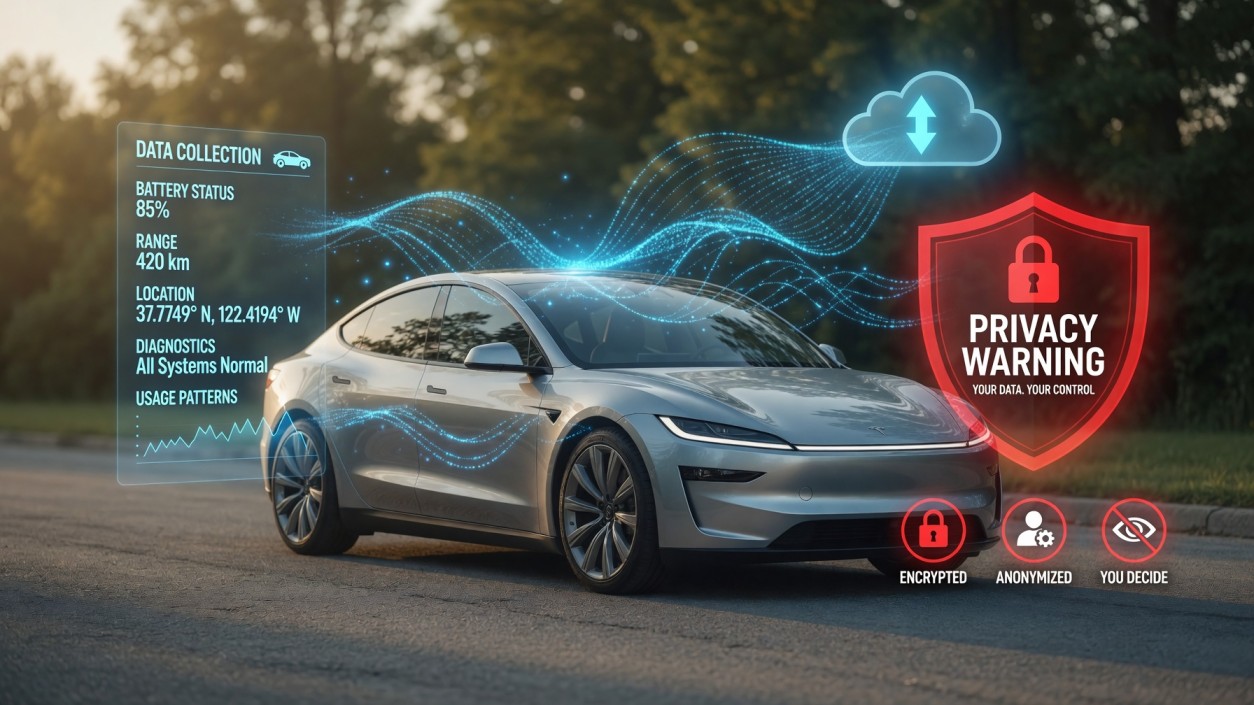
Modern electric vehicles gather a wide range of information. For example, they track location history, driving patterns, and battery usage. In addition, many vehicles record voice commands, infotainment activity, and data from cameras and sensors. This information often travels to the manufacturer’s servers through an internet connection. As a result, manufacturers gain access to detailed insights about how owners use their vehicles.
Major EV Data Privacy Concerns in Canada
Several important issues have emerged regarding EV data privacy in Canada. First, many manufacturers do not clearly explain what data they collect or how they use it. Privacy policies are often long and difficult to understand. Because of this, many EV owners remain unaware of the extent of data collection.
Second, some manufacturers share vehicle data with third parties. These parties may include insurance companies, marketing firms, or even government agencies. This practice raises concerns about how personal information might be used without clear consent.
Third, connected vehicles face growing cybersecurity risks. If hackers breach a vehicle’s systems, they could access sensitive data such as location history or personal details. This risk becomes even more serious as vehicles become more connected and autonomous.
Furthermore, the entry of Chinese EV brands like BYD and Zeekr into Canada has added another layer of concern. Some experts worry that data may be sent to servers outside Canada, which raises both privacy and national security questions.
Canadian Privacy Laws and EVs
Canada has privacy laws such as PIPEDA at the federal level, along with provincial laws in Quebec, Alberta, and British Columbia. However, these laws were not originally designed for connected vehicles. Currently, Canada lacks specific regulations that address automotive data privacy in detail. As a result, many experts are calling for stronger rules to protect EV owners’ personal information.
Risks for Canadian EV Owners
EV owners in Canada face several potential risks related to data privacy. For instance, insurance companies could use driving data to monitor behavior and adjust premiums. In addition, location data could be used for marketing or surveillance purposes without the owner’s full knowledge. Moreover, if a data breach occurs, sensitive personal information could be exposed. These risks are likely to increase as more vehicles gain advanced connectivity features.
How to Protect Your Privacy
EV owners can take several steps to reduce privacy risks. First, they should review their vehicle’s privacy settings and disable unnecessary data sharing features. Second, they should carefully read the manufacturer’s privacy policy before agreeing to it. In addition, using strong passwords and enabling two-factor authentication for connected accounts can help improve security. Furthermore, owners should stay informed about software updates, as these may affect privacy settings.
Final Thoughts
Overall, EV data privacy concerns in Canada are real and growing. While electric vehicles offer many advantages, they also collect large amounts of personal data that can be misused if not properly protected. Canadian privacy laws currently lag behind the rapid development of connected vehicle technology. As EV adoption continues to rise, both manufacturers and regulators will need to take stronger action to protect consumer data. For now, Canadian EV owners should stay informed and take proactive steps to safeguard their personal information.
Would you like to know which EV brands currently have the best and worst privacy practices in Canada?