

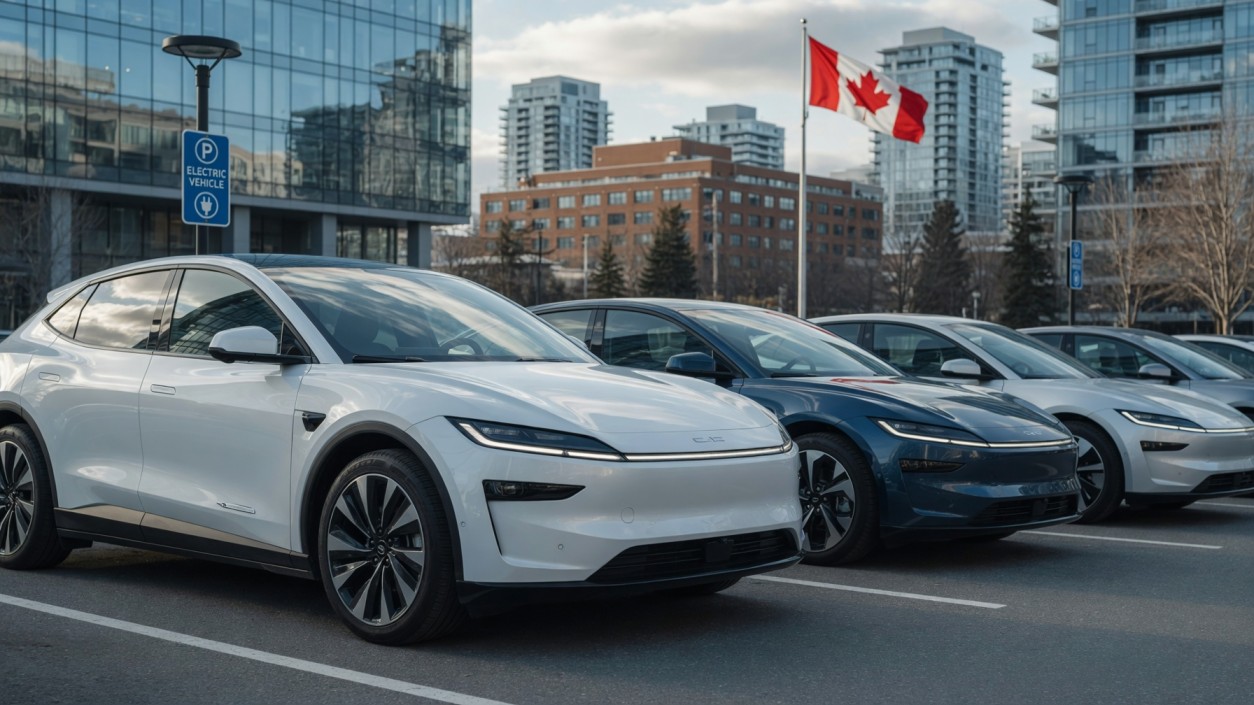
Electric vehicle adoption in Canada has been steadily increasing over the past few years. However, the pace of growth varies across different provinces and is influenced by several factors such as government incentives, charging infrastructure, and consumer awareness. In this article, we will analyze the EV adoption trends in Canada for 2026 and understand what is driving or slowing down this transition.

Current Status of EV Adoption in Canada
As of mid-2026, electric vehicles continue to gain popularity in Canada, but the overall market share remains relatively low compared to countries like Norway or China. Battery electric vehicles (BEVs) and plug-in hybrid electric vehicles (PHEVs) together make up a growing portion of new vehicle sales. However, internal combustion engine vehicles still dominate the Canadian auto market.
The growth in EV sales has been supported by federal and provincial incentives, improving model availability, and increasing consumer interest in sustainable transportation.
Provincial EV Adoption Trends
EV adoption in Canada is not uniform across all provinces. Some regions are leading the transition while others are lagging behind.
- British Columbia and Quebec continue to lead in EV adoption due to strong provincial incentives and better charging infrastructure.
- Ontario has shown steady growth, especially after reintroducing some EV purchase incentives.
- Provinces like Alberta, Saskatchewan, and Manitoba have lower adoption rates, mainly due to lower incentives and limited charging infrastructure.
- Atlantic provinces are also seeing gradual growth, though at a slower pace.
This regional difference highlights the need for more balanced policies and infrastructure development across the country.
Key Factors Driving EV Adoption in 2026
Several factors are contributing to the growth of electric vehicles in Canada:
- Government Incentives: Federal and provincial rebates continue to make EVs more affordable for buyers.
- Expanding Model Range: More electric vehicle options are now available across different price segments.
- Growing Charging Infrastructure: More fast chargers are being installed on highways and in urban areas.
- Rising Fuel Prices: Higher gasoline prices are pushing some consumers toward electric alternatives.
- Environmental Awareness: Increasing concern about climate change is encouraging more people to consider EVs.
Challenges Slowing Down EV Adoption
Despite the progress, several challenges continue to slow down EV adoption in Canada:
- High Upfront Cost: Even with incentives, many EVs remain more expensive than comparable gas vehicles.
- Range Anxiety: Concerns about driving range, especially in winter, still affect buyer decisions.
- Limited Charging Infrastructure in Rural Areas: Many smaller towns and rural regions still lack sufficient fast chargers.
- Cold Weather Performance: Battery range drops significantly in extreme cold, which is a major concern for Canadian drivers.
- Limited Awareness: Some consumers still lack proper knowledge about EV ownership costs and benefits.
EV Sales Growth Comparison (2023–2026)
| Year | EV Market Share (%) | Key Trend |
|---|---|---|
| 2023 | Around 8–9% | Steady growth after incentive changes |
| 2024 | Around 11–12% | Strong growth in BC and Quebec |
| 2025 | Around 14–15% | Continued growth with more model options |
| 2026 (Projected) | Around 17–19% | Faster growth expected with new Chinese brands |
Future Outlook for EV Adoption in Canada
Looking ahead, EV adoption in Canada is expected to grow at a faster pace between 2026 and 2030. Several factors will influence this growth:
- Entry of more affordable Chinese EV brands
- Expansion of fast-charging infrastructure
- Potential new federal and provincial incentives
- Improvements in battery technology and cold-weather performance
However, for Canada to meet its 2035 zero-emission vehicle targets, stronger policy support and faster infrastructure development will be required.
Final Thoughts
EV adoption in Canada is moving in the right direction, but the pace remains uneven across provinces. While British Columbia and Quebec continue to lead, other regions need more support to catch up. Factors such as affordability, charging infrastructure, and winter performance will play a crucial role in determining how quickly Canadians switch to electric vehicles.
As more affordable models enter the market and charging networks expand, EV adoption is expected to accelerate in the coming years. However, addressing regional disparities and consumer concerns will be essential for achieving widespread adoption across the country.
Would you like a provincial breakdown of EV adoption rates or a comparison with EV growth in the United States?