

Canada experienced a significant decline in electric vehicle sales in 2025. After years of steady growth, the removal of the popular federal rebate caused a clear slowdown in demand. In this article, we examine the official data, the reasons behind the drop, and the new government program that replaced the old incentive.
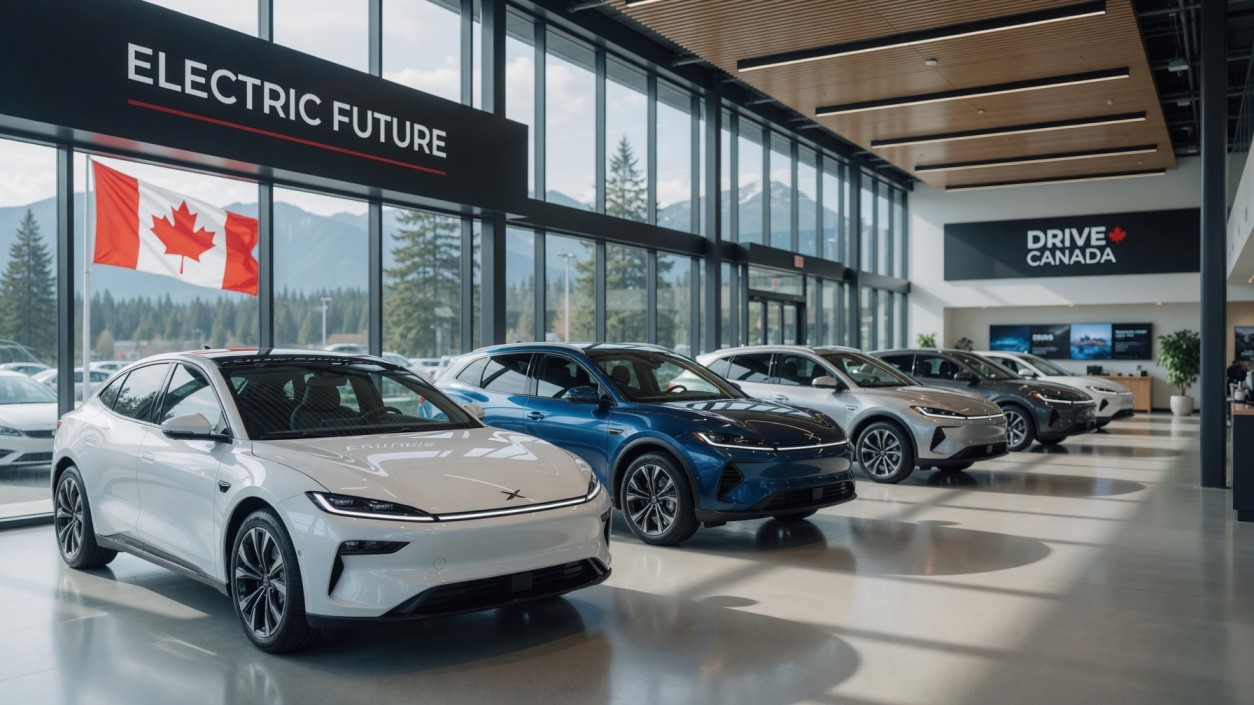

What Happened to Canada EV Sales in 2025?
In 2024, zero-emission vehicles (ZEVs), which include battery electric vehicles and plug-in hybrids, reached a strong market share of approximately 14% to 15.4% of new light-duty vehicle sales in Canada.
In 2025, that number fell sharply. Official figures show the annual ZEV market share dropped to between 8.7% and 10.3%, depending on the data source. Early months of 2025 saw the steepest decline, with market share falling to around 7–9% in some periods before a modest recovery later in the year.
This represents a relative drop of more than 30% compared to the previous year’s peak performance. Absolute sales numbers also declined significantly during the first half of 2025.
Main Reason: End of the iZEV Rebate
The biggest factor behind the decline was the end of the Incentives for Zero-Emission Vehicles (iZEV) program. The federal government paused and then officially closed the program in early 2025 after the available funding ran out. Many buyers had been waiting for the $5,000 rebate, and its sudden absence reduced demand almost immediately.
Other contributing factors included:
- Economic uncertainty and higher interest rates
- Reduced provincial incentives in some regions
- Consumer hesitation around certain brands
- Limited availability of truly affordable EV models
Introduction of the New EVAP Program
In response to the sales drop, the federal government launched a new incentive program in 2026 called the Electric Vehicle Affordability Program (EVAP).
Key features of EVAP include:
- Up to $5,000 for eligible battery-electric vehicles
- Up to $2,500 for plug-in hybrid vehicles
- Focus on more affordable models (final transaction value of $50,000 or less)
- Preference for vehicles made in Canada or in free-trade agreement countries
- Point-of-sale rebate applied by the dealership
The program officially started accepting eligible purchases from mid-February 2026 and is designed to run for several years with gradually reducing incentive amounts.
Impact on the Market
The 2025 drop showed how heavily Canadian EV sales had depended on federal incentives. Without the rebate, many price-sensitive buyers delayed their purchase or switched back to gasoline or hybrid vehicles.
However, the recovery in the later months of 2025 and the launch of EVAP in 2026 suggest that demand can return when financial support is available, especially for lower-priced models.
Final Thoughts
The sharp decline in Canada EV sales in 2025 clearly demonstrated the importance of purchase incentives for accelerating electric vehicle adoption. While the end of the iZEV program caused a temporary setback, the introduction of the more targeted Electric Vehicle Affordability Program aims to support affordable EVs going forward.
Whether this new approach will fully restore growth remains to be seen, but it marks a shift toward focusing incentives on more accessible models rather than higher-priced electric vehicles.
Would you like a comparison of which specific models currently qualify for the full $5,000 EVAP rebate?